



Florida's climate doesn't give your HVAC system a break. Between the relentless humidity, scorching summers that stretch from May through October, and year-round demands on your cooling system, breakdowns happen when you least expect them: and they're expensive.
The good news? Most costly HVAC failures are preventable. A few simple maintenance habits, done consistently, keep your system running efficiently and catch small problems before they turn into emergency repair calls. This guide breaks down five practical steps that work specifically for Florida's unique climate challenges. We're talking about real, actionable maintenance you can implement today to protect your investment and keep your home comfortable year-round.
Step 1: Replace or Clean Air Filters Every 30-60 Days
Your air filter is the first line of defense against system strain and failure. In Florida, that filter works overtime.
Clogged filters restrict airflow, forcing your HVAC system to work harder just to push cool air through your home. That extra strain increases energy consumption, drives up your utility bills, and shortens your system's lifespan. Worse, a struggling system is more likely to fail during peak summer months when you need it most.
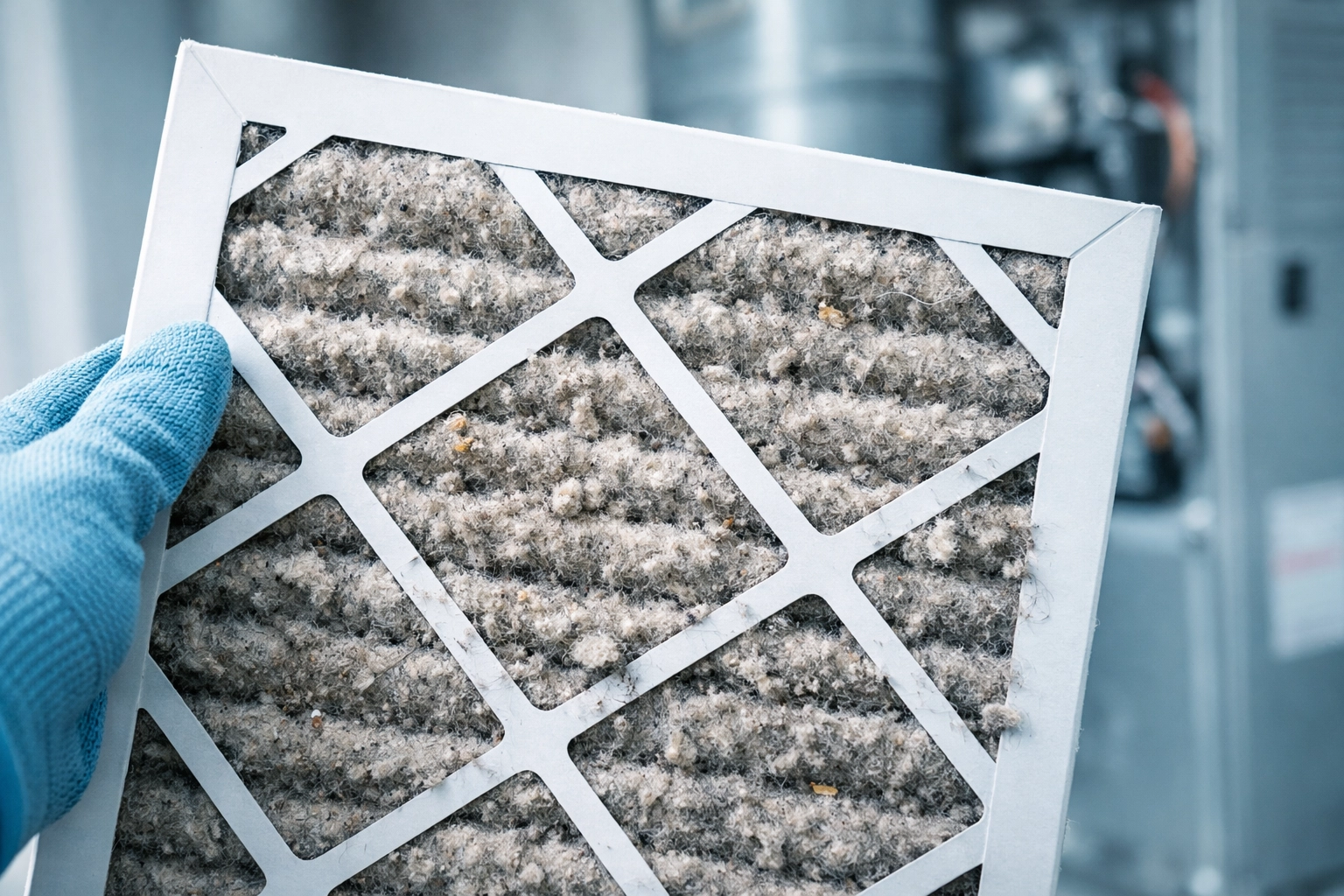
Why Florida demands more frequent changes:
Florida's humidity creates an ideal environment for dust, pollen, mold spores, and other airborne particles to accumulate faster than in drier climates. If you have pets, live near construction, or keep windows open frequently, your filters face even more demand.
Create a replacement routine:
- Check your filter monthly, especially during summer
- Replace disposable filters every 30-60 days
- Clean reusable filters according to manufacturer guidelines
- Set a phone reminder or mark your calendar to stay consistent
- Keep spare filters on hand so you're never caught without one
A $15 filter changed regularly prevents a $500+ repair bill. It's the single most cost-effective maintenance step you can take.
Step 2: Clear Debris Around Your Outdoor Unit Monthly
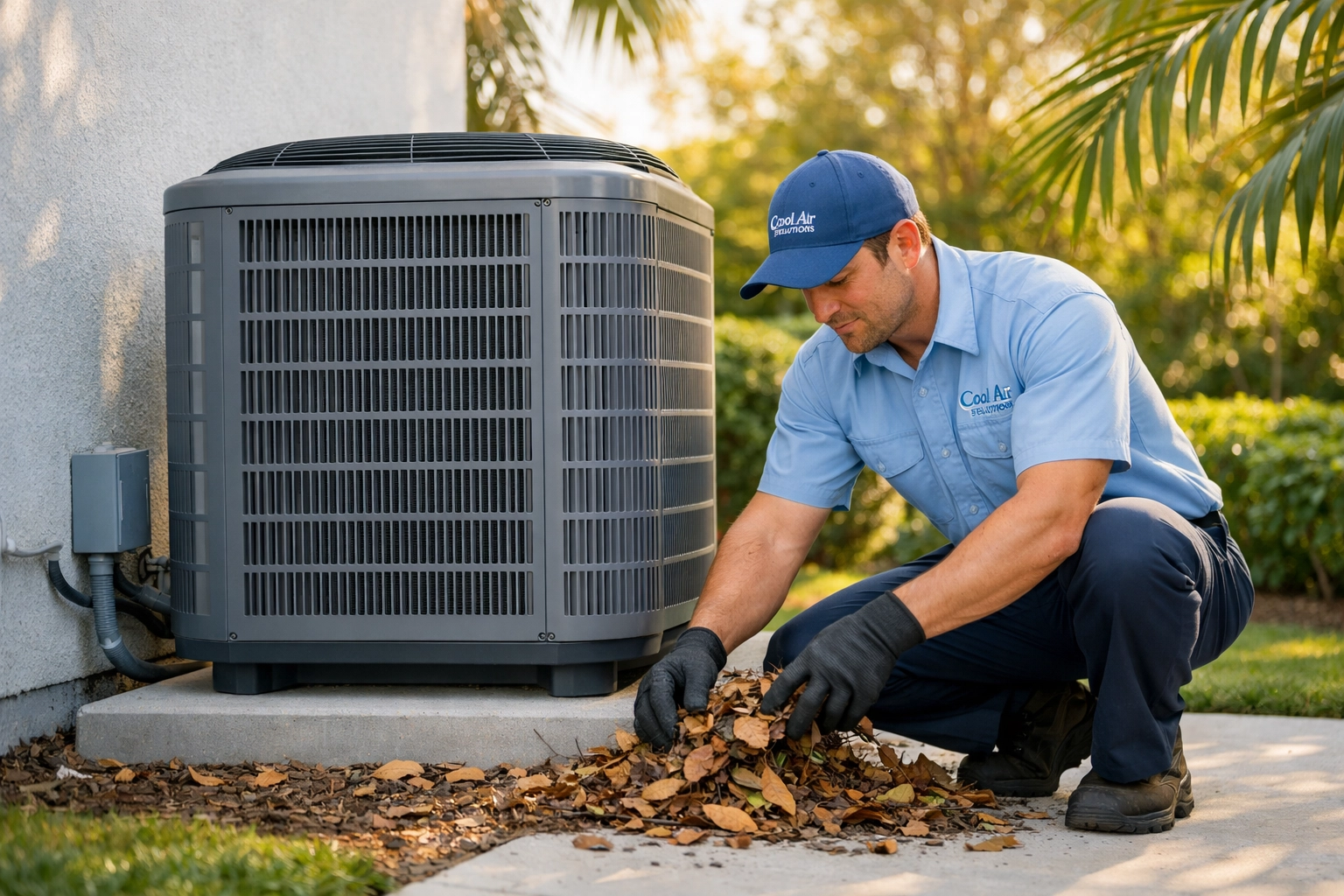
Your outdoor condenser unit needs room to breathe. Florida's lush vegetation and frequent storms create constant debris accumulation that directly impacts your system's cooling efficiency.
When leaves, dirt, grass clippings, or landscape overgrowth block your outdoor unit, the condenser can't release heat properly. The result? Your system runs longer cycles, consumes more energy, and overheats: leading to compressor failure, which is one of the most expensive HVAC repairs you can face.
Monthly outdoor unit maintenance checklist:
- Remove leaves, branches, and debris from around the unit
- Clear grass clippings after every lawn mowing
- Trim bushes and shrubs to maintain at least 2 feet of clearance on all sides
- Cut back tree branches that hang within 6-8 feet of the unit
- Remove potted plants or decorative items placed near the condenser
- Gently rinse the exterior fins with a garden hose (low pressure) to remove surface dirt
What to look for during your inspection:
Check for bent or damaged fins on the unit's exterior. These thin metal blades are easily damaged but crucial for heat exchange. If you notice significant damage, a licensed technician can straighten them during your next service visit.
Keep the concrete pad level. If you notice your unit settling or tilting, it can strain refrigerant lines and cause premature failure. Florida's sandy soil and heavy rainfall can cause settling over time.
This 10-minute monthly task prevents overheating, improves efficiency, and extends your system's life.
Step 3: Schedule Professional Tune-Ups Twice Yearly
DIY maintenance keeps your system running day-to-day, but professional inspections catch problems you can't see: before they become expensive failures.
Florida HVAC systems work harder and longer than systems in most other states. That constant demand accelerates wear on components. Professional maintenance identifies worn parts, potential failures, and efficiency issues while they're still manageable.
Schedule tune-ups strategically:
- Spring service (March-April): Prepare your system for summer's brutal cooling demands
- Fall service (October-November): Ensure heating components work before winter and give your system a post-summer checkup
What professional maintenance includes:
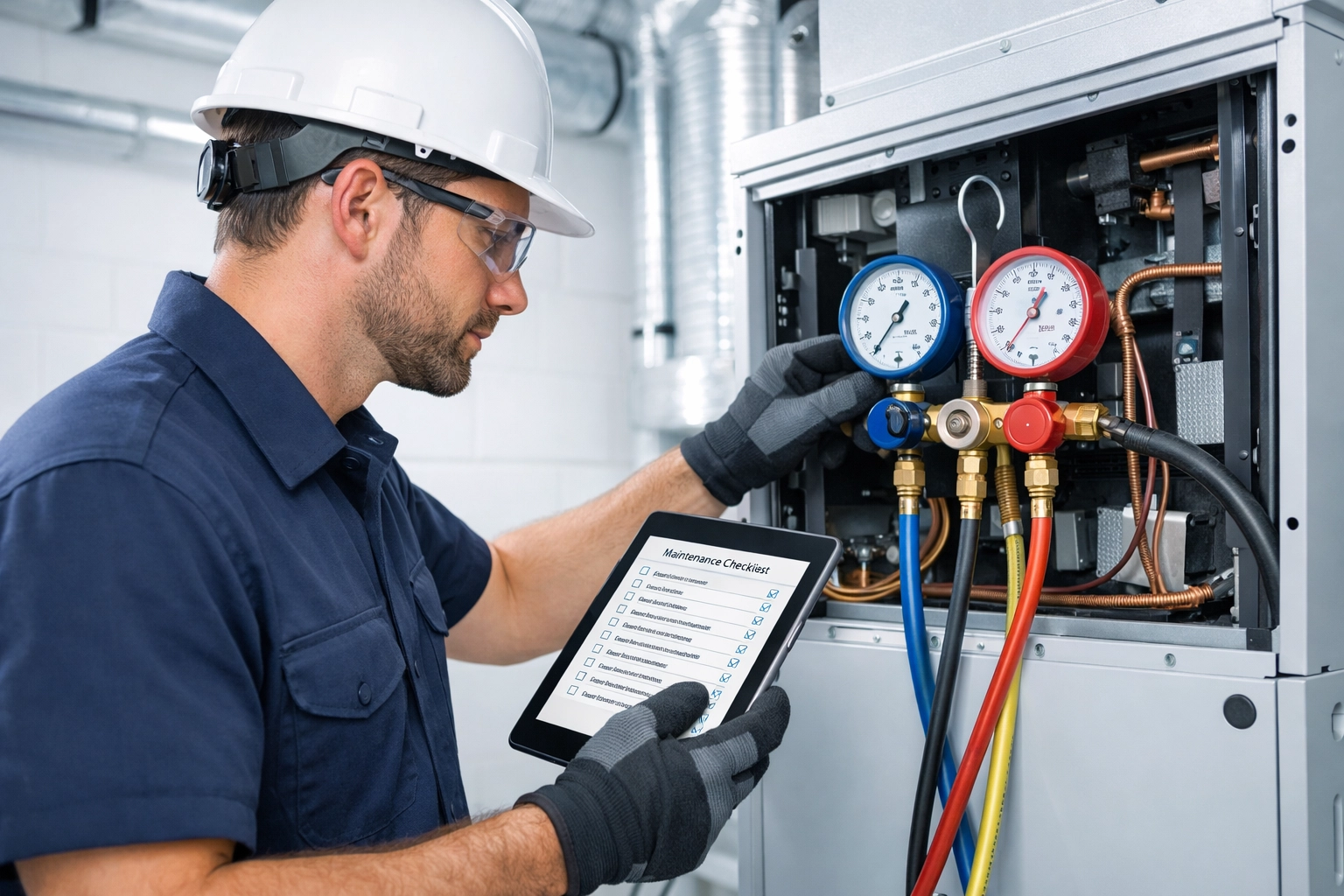
A comprehensive tune-up goes far beyond filter changes. Licensed technicians clean evaporator and condenser coils, measure and adjust refrigerant levels (crucial in Florida's heat), inspect and tighten all electrical connections, lubricate moving parts to reduce friction, flush condensate drain lines (essential in humid climates), test thermostat accuracy and calibration, examine ductwork for leaks or damage, and run full system performance diagnostics.
The cost vs. savings equation:
A professional tune-up typically costs $100-200. Compare that to emergency AC repair during a July heat wave, which averages $500-1,500 depending on the issue. Regular maintenance also improves efficiency by 15-20%, reducing your monthly cooling costs.
Why Florida building codes matter:
Many Florida jurisdictions require licensed HVAC contractors for any work involving refrigerant, electrical components, or code compliance. Working with a licensed professional ensures your system meets local requirements and stays covered under warranty.
If you're in Broward County, Miami-Dade, or elsewhere across Florida, routine maintenance with a licensed contractor protects both your comfort and your investment.
Step 4: Inspect and Maintain Coils and Condensate Drains Quarterly
Florida's humidity creates perfect conditions for the two most common HVAC problems: dirty coils and clogged drains. Both cause efficiency loss, water damage, and system failure if ignored.
Understanding your coils:
Your HVAC system has two sets of coils. The evaporator coil (inside your home) absorbs heat from your air. The condenser coil (in your outdoor unit) releases that heat outside. When either coil gets dirty, heat transfer becomes less efficient, forcing your system to run longer to achieve the same cooling.
In Florida's dusty, humid environment, coils accumulate grime faster than in other climates. That buildup acts as insulation, preventing proper heat exchange and causing your compressor to work harder.
Quarterly coil inspection:
- Check your indoor evaporator coil access panel (usually near your air handler)
- Look for visible dust, dirt, or mold growth on the coils
- If you see buildup, schedule professional cleaning
- Inspect outdoor coils for debris, pollen, or corrosion
- Never use high-pressure washing, which damages delicate fins
The condensate drain problem:
As your system cools humid Florida air, it produces condensation: lots of it. A typical AC unit removes 10-20 gallons of water per day during summer. That water flows through your condensate drain line.
When drain lines clog (from algae, mold, or debris), water backs up into your system or home. You'll see water pooling around your air handler, water stains on ceilings, or increased indoor humidity even when your AC runs constantly.
Preventing drain clogs:
- Locate your condensate drain line (usually a PVC pipe near your outdoor unit)
- Check that water flows freely when your system runs
- Pour a cup of white vinegar or specialized AC drain cleaner down the line monthly
- Watch for warning signs: musty odors, water near your air handler, or unexplained humidity increases
Many Florida homeowners deal with drain clogs multiple times per year. Quarterly inspections and monthly preventive treatments keep water flowing and prevent water damage to your home.
Step 5: Monitor Your System and Test It Regularly
Your HVAC system communicates when something's wrong. Learning to recognize those signals helps you address minor issues before they escalate into major repairs.
Listen to your system:
Normal operation sounds like a gentle hum with occasional clicks when the system cycles on and off. Unusual noises mean something's wrong:
- Grinding or metal-on-metal sounds: Worn bearings or motor problems
- Buzzing or humming from outdoor unit: Electrical issues or failing compressor
- Rattling or banging: Loose components or debris in the system
- Hissing: Potential refrigerant leak or ductwork issues
- Bubbling or gurgling: Refrigerant problems or condensate drain issues
Don't ignore unusual sounds. They're early warnings that save you money if addressed quickly.
Quarterly system testing:
Even during Florida's mild winters, test both heating and cooling modes quarterly. Set your thermostat to heat mode and verify warm air flows within 10-15 minutes. Switch to cooling mode and confirm cold air production. Check that all vents throughout your home deliver adequate airflow.
Thermostat optimization for Florida:
Your thermostat settings directly impact system efficiency and longevity. Set your thermostat to 78°F when you're home and 82°F when away. Every degree below 78°F increases cooling costs by 5-8%. Install a programmable or smart thermostat to automate temperature adjustments and reduce unnecessary system runtime.
Monitor performance indicators:
- Cooling time: Your home should reach set temperature within 15-20 minutes
- Cycle length: Normal cooling cycles run 15-20 minutes, 2-3 times per hour
- Energy bills: Sudden increases (without rate changes) signal efficiency problems
- Indoor humidity: Should stay between 40-60% when system runs properly
When to call a professional immediately:
Some situations require licensed technician intervention:
- Refrigerant leaks (often indicated by ice on refrigerant lines or reduced cooling)
- Electrical issues (tripped breakers, burning smells, or sparking)
- Complete system failure
- Water leaks or flooding around your air handler
- Temperature differences exceeding 20°F between supply and return vents
Regular monitoring helps you catch problems early, schedule repairs before emergencies, maintain efficiency, and extend your system's lifespan by years.
Protecting Your Investment in Florida's Demanding Climate
Florida's climate demands more from HVAC systems than almost anywhere else in the country. The combination of extreme heat, high humidity, salt air in coastal areas, and near-constant system operation creates unique maintenance requirements.
These five steps: monthly filter changes, outdoor unit clearing, twice-yearly professional tune-ups, quarterly coil and drain maintenance, and regular system monitoring: work together to prevent the most common and costly HVAC failures Florida homeowners face.
The real cost of skipping maintenance:
According to industry data, properly maintained HVAC systems last 15-20 years in Florida. Neglected systems fail within 8-12 years. That's a $5,000-8,000 replacement that could have been avoided with $200-400 in annual maintenance.
Building a maintenance routine:
Create a simple calendar system:
- Monthly: Filter check/replacement and outdoor unit clearing
- Quarterly: Coil inspection, drain line treatment, and system performance test
- Twice yearly: Professional tune-up from a licensed contractor
Florida HVAC Specialists offers maintenance plans designed specifically for Florida's climate challenges. Regular professional service catches problems early, maintains efficiency year-round, ensures code compliance, and keeps your system covered under warranty provisions.
Whether you're in Collier County, Brevard County, or anywhere across the state, consistent maintenance is your best defense against costly breakdowns and uncomfortable summers.
Your HVAC system is one of your home's largest investments. These five preventive steps protect that investment, keep your family comfortable, and save you thousands in avoided repairs and premature replacement costs. Start implementing them today: your future self (and your wallet) will thank you.